

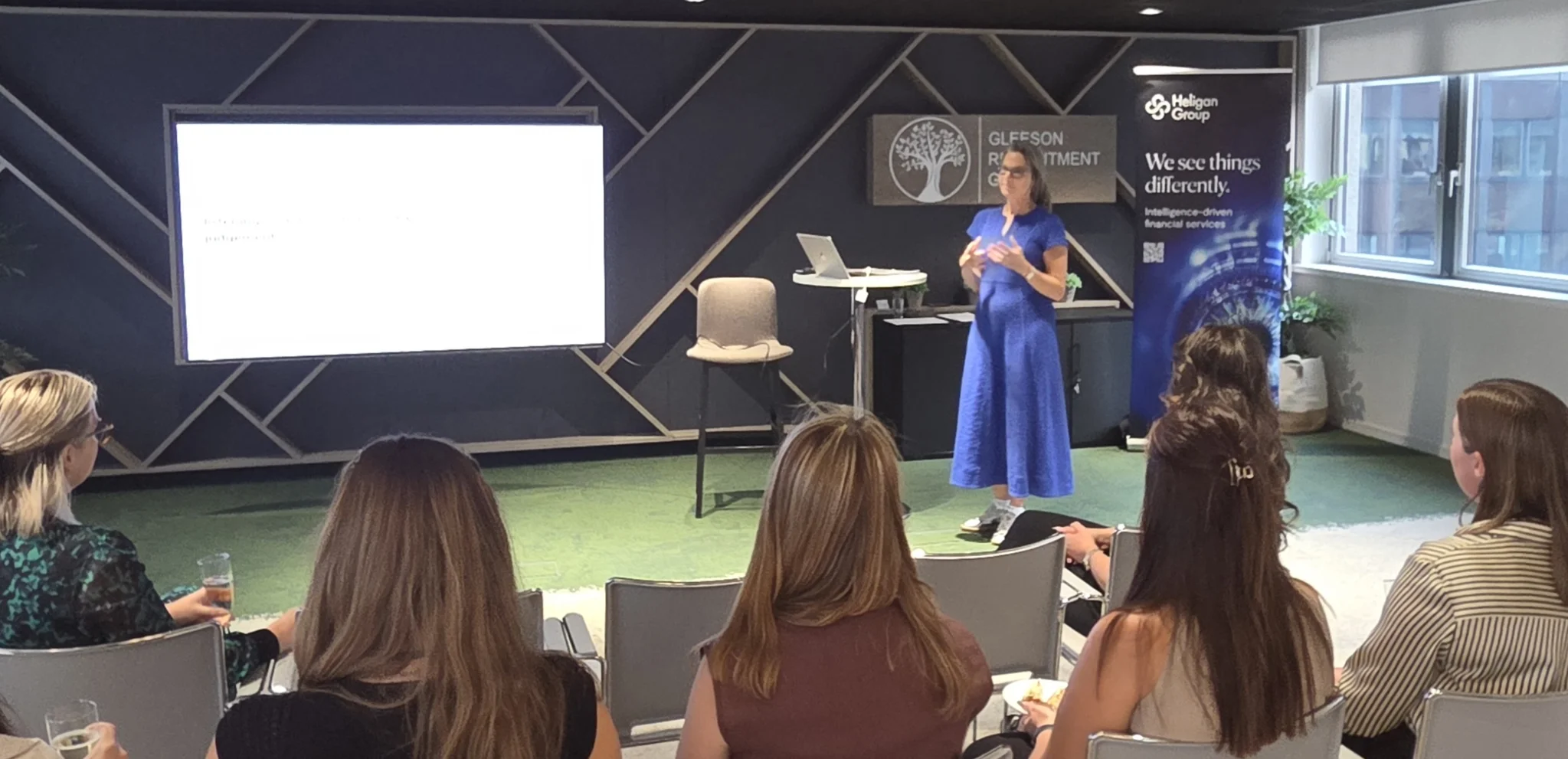
We were recently joined by Mandy Rees, a leadership coach for women and a culture strategist for organisations, for a session around the power of soft skills.
Mandy has lived experience, having trained as a solicitor and worked for 14 years in a top-tier international practice, before later specialising in the transition to motherhood, postnatal mental health, and women’s leadership development. She brings both boardroom credibility and a personal understanding of the pressures facing women in high-performance environments.
Soft skills are increasingly shaping professional success but are still too often overlooked. Drawing on her own experience in the legal profession and her work coaching women in business, she shared why qualities such as empathy, listening, intuition and relationship-building are not "nice-to-have" skills. They are critical business tools. Mandy offered a unique perspective on how leadership is changing and why women should embrace their natural strengths rather than adapt to outdated leadership stereotypes.
The conversation sparked honest reflections from women across a range of sectors, all sharing experiences of navigating careers in environments where success has often been associated with being the loudest voice in the room.
What Are Soft Skills and Why Are They Important?
Soft skills are interpersonal and emotional capabilities that help people communicate effectively, build relationships, influence others and navigate workplace challenges.
Examples include:
- Emotional intelligence
- Active listening
- Empathy
- Self-awareness
- Communication skills
- Relationship-building
- Conflict resolution
- Adaptability
While technical expertise may secure opportunities, soft skills often determine how effectively professionals lead teams, manage clients and influence business outcomes.
In many professional environments, technical competence is expected. What differentiates exceptional leaders is their ability to understand people, build trust and create meaningful connections.
Why Are Soft Skills Becoming More Valuable in Leadership?
As workplaces become more complex and technology continues to automate routine tasks, human-centred skills are becoming increasingly important.
Leaders today must be able to:
- Build trust with clients and colleagues
- Navigate challenging conversations
- Encourage collaboration
- Create inclusive cultures
- Support employee wellbeing
- Manage change effectively
The ability to understand emotions, read situations and communicate with empathy can significantly influence business performance, employee engagement and client relationships.
The future of leadership is not just about expertise. It is about understanding people.
Does Leadership Have to Be Loud?
No, is the short answer.
One of the most important themes discussed during the event was the misconception that effective leadership always requires assertiveness, dominance or being the loudest voice in the room.
Historically, many corporate environments rewarded highly visible and often traditionally masculine leadership styles. As a result, some women felt pressure to suppress qualities such as empathy, collaboration and emotional awareness in order to progress.
Today, leadership is being redefined, and modern leaders are increasingly creating influence through:
- Curiosity
- Authenticity
- Strong communication
- Relationship-building
- Psychological safety
- Collaboration
Leadership does not always come from authority or volume. It often comes from creating environments where others feel heard, valued and motivated to contribute.
What Is Emotional Intelligence and Why Does It Matter at Work?
Emotional intelligence is the ability to recognise, understand and manage emotions in yourself and others.
Professionals with high emotional intelligence are typically better equipped to:
- Manage workplace relationships
- Resolve conflict
- Understand client needs
- Lead teams effectively
- Handle pressure and uncertainty
During the discussion, attendees shared examples of situations where emotional intelligence helped improve outcomes.
In one example, a client was perceived as demanding during a major transaction. Rather than viewing the behaviour negatively, the professional recognised that the client's concerns were driven by anxiety and a fear that important details might be missed.
By providing regular updates, reassurance and proactive communication, trust was built, frustration reduced and the relationship strengthened.
This ability to understand what lies beneath surface behaviour is often what separates exceptional professionals from those who are simply technically capable.
Why Are Soft Skills Often Overlooked?
One challenge facing many organisations is that soft skills are frequently invisible.
Performance measures often focus on:
- Revenue generation
- Sales performance
- Project delivery
- Productivity
- Billable hours
However, less visible contributions can have a significant impact on organisational success.
Examples include:
- Rebuilding damaged client relationships
- Supporting struggling colleagues
- Improving team morale
- Encouraging collaboration
- Retaining valuable employees
These actions may not always appear on performance reports, but they contribute directly to culture, engagement and long-term business results.
Many attendees reflected on how this emotional and relational work is often undertaken without formal recognition; despite the value it creates.
Can You Be Empathetic and Still Set Boundaries?
Absolutely.
One of the strongest messages from the session was that soft power is not the same as people-pleasing. Effective professionals understand how to balance empathy with clear boundaries.
Examples include:
- “I can help with that, but not today.”
- “I can prioritise this, but another deadline will need to move.”
- “I'd love to support you, but I don't have the capacity right now.”
Setting boundaries allows individuals to protect their time, energy and wellbeing while maintaining positive and professional relationships. In fact, clear and respectful boundaries are often a sign of strong leadership rather than weakness.
How Will Artificial Intelligence Increase the Importance of Soft Skills?
As artificial intelligence and automation become more common in the workplace, uniquely human capabilities are becoming more valuable.
Technology can process information, automate tasks and improve efficiency. However, it cannot fully replicate:
- Trust-building
- Human judgement
- Emotional awareness
- Empathy
- Influence
- Relationship management
- Contextual understanding
As organisations continue to adopt AI, professionals who can combine technical expertise with strong interpersonal skills will be increasingly valuable.
Soft skills may become one of the most important competitive advantages in the future workplace.
Are Soft Skills Only Important for Women?
No. Soft skills are human skills, not gender-specific skills.
While the discussion focused on women's leadership experiences, the broader message applies to everyone.
Successful organisations benefit when people are encouraged to use the full range of their strengths, whether those strengths are analytical, strategic, relational or creative.
The goal is not to replace one leadership style with another. The goal is to create workplaces where different approaches to leadership are recognised, respected and rewarded.
How Can Organisations Better Recognise Soft Skills?
Organisations can strengthen performance and culture by:
- Including emotional intelligence in leadership development programmes
- Recognising relationship-building in performance reviews
- Measuring collaboration alongside commercial results
- Rewarding inclusive leadership behaviours
- Supporting psychologically safe workplaces
- Valuing employee engagement and retention efforts
When organisations recognise both technical excellence and human-centred leadership, they create more sustainable and effective cultures.
Final Thoughts: Why Soft Skills Are a Leadership Advantage
The Women Networking Differently event highlighted a significant shift in how leadership success is defined.
Today, influence is no longer based solely on expertise, productivity or visibility. It is increasingly shaped by a person's ability to communicate effectively, build trust, understand others and create meaningful relationships.
For many women, the message was empowering: the qualities they may have once been encouraged to downplay are often the very qualities that drive exceptional leadership.
As workplaces continue to evolve, organisations that recognise the commercial value of soft skills will be better positioned to attract talent, strengthen culture and achieve lasting success.
Frequently Asked Questions
What are soft skills in leadership?
Soft skills are interpersonal abilities such as communication, empathy, emotional intelligence, adaptability and relationship-building that help leaders work effectively with others.
Why are soft skills important in the workplace?
Soft skills improve collaboration, strengthen relationships, build trust, enhance customer experiences and contribute to better leadership outcomes.
Can soft skills be developed?
Yes. Skills such as communication, emotional intelligence, active listening and boundary-setting can be developed through practice, coaching and self-awareness.
How does emotional intelligence improve leadership?
Emotional intelligence helps leaders understand and manage emotions, navigate difficult conversations, build trust and create positive workplace cultures.
Why are soft skills becoming more valuable in the age of AI?
As technology automates routine and technical tasks, human capabilities such as empathy, judgement, influence and relationship-building become increasingly important and difficult to replicate.